
 EN
EN
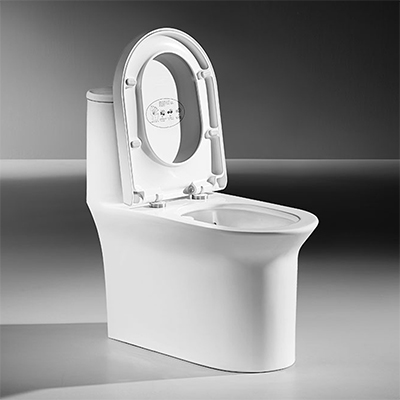
Selecting the right toilet factory is one of the most critical decisions for wholesalers, commercial contractors, and regional distributors. A supplier isn't just a vendor—they are the backbone of your supply chain, directly impacting your product quality, profit margins, brand reputation, and delivery timelines.
However, the international sanitary ware market presents significant challenges: inconsistent ceramic vitrification, hidden defect rates, shipping delays, and weak R&D.
How do you distinguish an elite manufacturer from a trading company or a mid-tier assembly shop?
This guide breaks down the essential criteria for evaluating a toilet wholesale manufacturer and demonstrates what a world-class production infrastructure looks like.
1. Look for Mass Manufacturing Scale and Industry Proven Track Record
When placing high-volume wholesale orders, factory capacity is your insurance policy. A small facility running at 95% capacity leaves zero room for unexpected supply surges or machinery downtime, increasing your risk of delayed shipments.
When auditing a factory’s structural capacity, evaluate:
- Total production footprint and annual output.
- Advanced equipment (e.g., continuous tunnel kilns, high-pressure casting lines).
- Multi-base risk diversification (having multiple regional production hubs).
Benchmark Example: ARROW’s Production Infrastructure
Established in Foshan in 1994, ARROW has grown into China's largest sanitary ware manufacturer by market capitalization, with an annual revenue exceeding $1.2 Billion USD.
Operating 10 state-of-the-art manufacturing bases covering a combined building area of 15 million square meters, ARROW operates a workforce of ~20,000 employees. This massive industrial scale ensures unshakeable production stability, rapid lead times, and the capacity to fulfill large-scale global wholesale orders without compromising quality.
2. Evaluate Raw Material Rigor and Quality Control (QC) Protocols
A low unit price is meaningless if your container arrives with hairline cracks, uneven glazing, or defective flushing mechanisms. Quality control must be proactive, not reactive.
A top-tier toilet factory must enforce a 5-Stage QC Framework:
[Raw Clay & Glaze Inspection] ➔ [Greenware High-Pressure Molding] ➔ [1280°C+ High-Temp Firing]
➔ [100% Water & Vacuum Flushing Test] ➔ [Drop-Test Packaging]
Key Questions to Ask the Factory:
- 1.Firing Temperature: Is the ceramics fired above 1200°C to guarantee a water absorption rate of below 0.2%? (Prevents odor absorption and structural cracking over time).
- 2.Glaze Thickness: Do they apply a self-cleaning nano-glaze with a thickness exceeding 1.1mm?
- 3.Testing Standards: Does every single toilet undergo a 100% flush test before final packing?
3. Prioritize R&D Depth and Smart Sanitary Ware Capabilities
The global market is shifting rapidly toward hygiene-first designs, water-saving regulations, and smart toilet technology. Partnering with a factory that merely copies older designs will leave your catalog obsolete within years.
Look for a manufacturer with strong in-house R&D capability that can handle:
- Hydraulic Engineering: Designing rimless bowls and tornado flushing systems for maximum waste removal with minimal water consumption.
- Smart Electronics: In-house development of smart bidet seats, instant heating modules, and UV sterilization features.
R&D Spotlight: The ARROW Innovation Engine
Innovation is backed by manpower and investment. ARROW maintains an elite R&D team of over 1,800 specialized engineers and designers, continually advancing smart bathroom electronics, eco-friendly flushing engineering, and ergonomic aesthetics.
With a global distribution network supported by over 19,000 official distributors, ARROW's product innovations are real-world tested across millions of residential and commercial spaces worldwide.
4. Assess Product Range Versatility and Comprehensive Solutions
Sourcing toilets from one factory, basins from another, and faucets from a third vendor creates massive supply chain complexity, mismatched finishes, and higher freight costs.
Working with a full-category manufacturer allows you to:
- Consolidate shipping containers to maximize freight efficiency.
- Ensure unified design languages, glazes, and color matching across entire product collections.
- Offer complete commercial or residential bathroom packages to your clients.
| Category | Typical Wholesale Requirements | ARROW Integrated Capability |
| ARROW Sanitary Ceramics | One-piece, Two-piece, Wall-hung, Smart Toilets, Basins | Fully In-House Manufactured |
| ARROW Bathroom Furniture | Solid wood, Stainless steel, Aluminum Vanities, Smart Mirrors | Fully In-House Manufactured |
| ARROW Hardware & Brassware | Thermostatic Shower sets, Faucets, Accessories | Fully In-House Manufactured |
| ARROW Bathing & Enclosures | Acrylic Bathtubs, Tempered Glass Shower Enclosures | Fully In-House Manufactured |
| Surface Materials | Ceramic tiles & Slabs for cohesive space design | Fully In-House Manufactured |
5. Verify OEM/ODM Flexibility & International Export Experience
A factory may produce great toilets for its domestic market, but international distribution requires strict adherence to global standards (e.g., CUPC, CE, WaterSense, SASO).
When selecting an OEM/ODM partner, verify that they offer:
- Customization: Laser-etched branding, customized cardboard packaging, tailored installation manuals, and localized flushing valve mechanisms.
- Compliance Expertise: Familiarity with target-market plumbing codes, structural certifications, and custom clearances.
- Scalable Logistics Management: Deep experience loading and securing sea-freight containers to minimize breakage during transit.
Quick Checklist: How to Audit Your Toilet Supplier
Before signing a contract or sending a deposit, use this quick checklist to grade your potential supplier:
- Structural Scale: Do they own their manufacturing facilities or rent them?
- Capacity Proof: Can they support 50+ containers per month if your business scales?
- Engineering Support: Do they have a dedicated R&D team to handle OEM engineering changes?
- Product Breadth: Can they supply a complete suite of sanitary ware products?
- QC Traceability: Does each toilet carry a unique production batch barcode?
Conclusion: Build Your Business on a Rock-Solid Manufacturing Foundation
Choosing a toilet wholesale factory goes beyond comparing price lists. Low-cost manufacturers often carry hidden costs—unreliable lead times, high defect rates, and lack of innovation.
By partnering with an industry heavyweight like ARROW, global buyers gain instant access to world-class industrial capacity (15M sq.m footprint), continuous innovation (1,800+ R&D engineers), and complete bathroom ecosystem solutions backed by over 30 years of manufacturing heritage.
Ready to Upgrade Your Wholesale Supply Chain?
Contact the ARROW Overseas B2B Division today to request our latest product catalog, OEM/ODM cooperation terms, and sample evaluation packages.